Advanced in vitro model for intestinal microbiota culture
Gut³Gel is a 3D in vitro model of the intestinal mucus layer for studying how a human gut microbiota grows, shifts and responds to treatment. This note compares it with broth culture and tests a prebiotic.
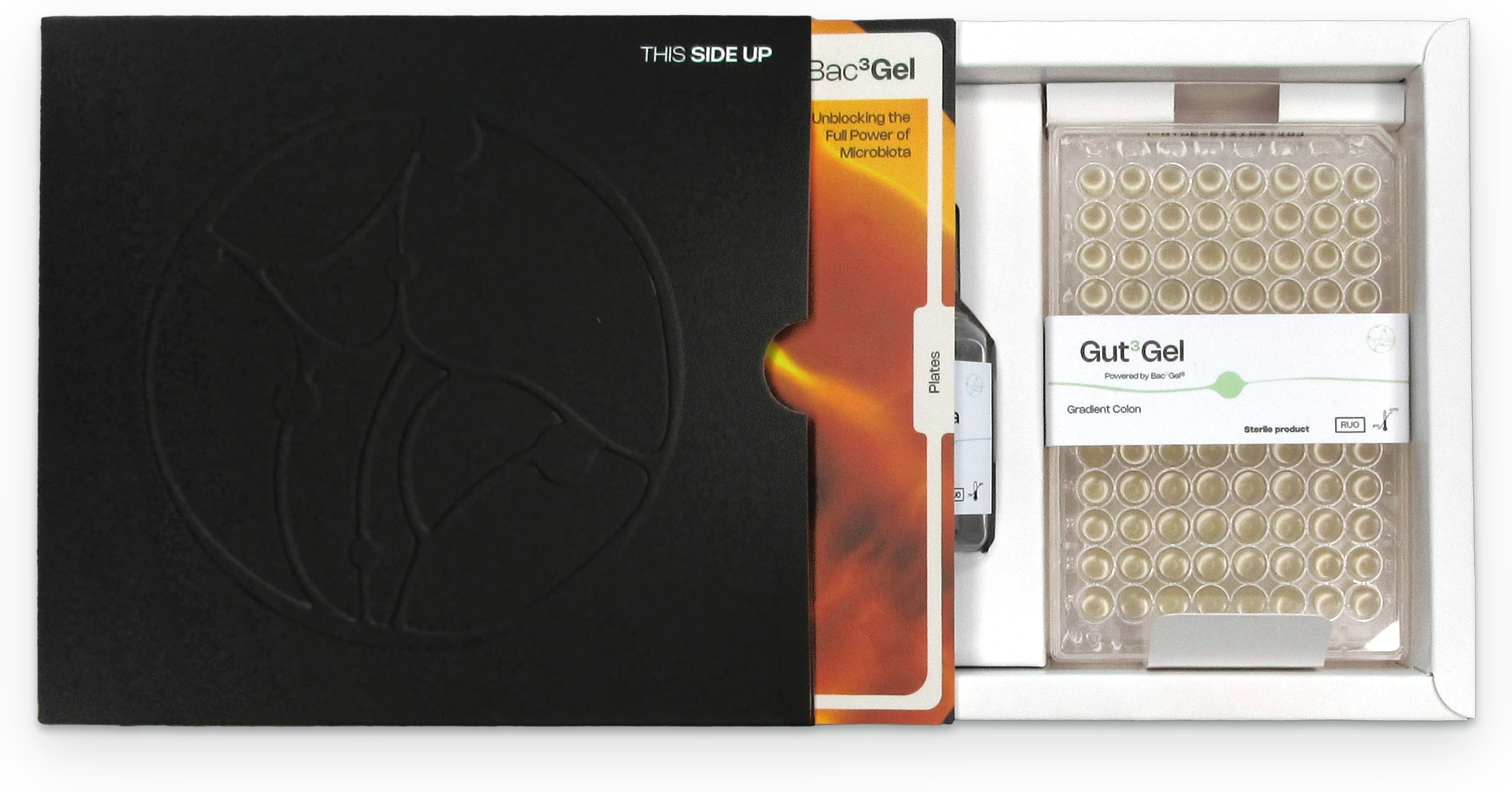
Model Gut3Gel, 3D intestinal mucus model
Sample Human donor gut microbiota
Compared with BHI broth, aerobic and anaerobic
Readouts Community composition, acetate and butyrate, metabolic activity (MTT)
A donor microbiota keeps a gut-like community in Gut3Gel
A human donor microbiota was cultured in Gut3Gel under normal conditions, and in Brain Heart Infusion (BHI) broth under anaerobic and normal conditions, and followed over time.
Community composition
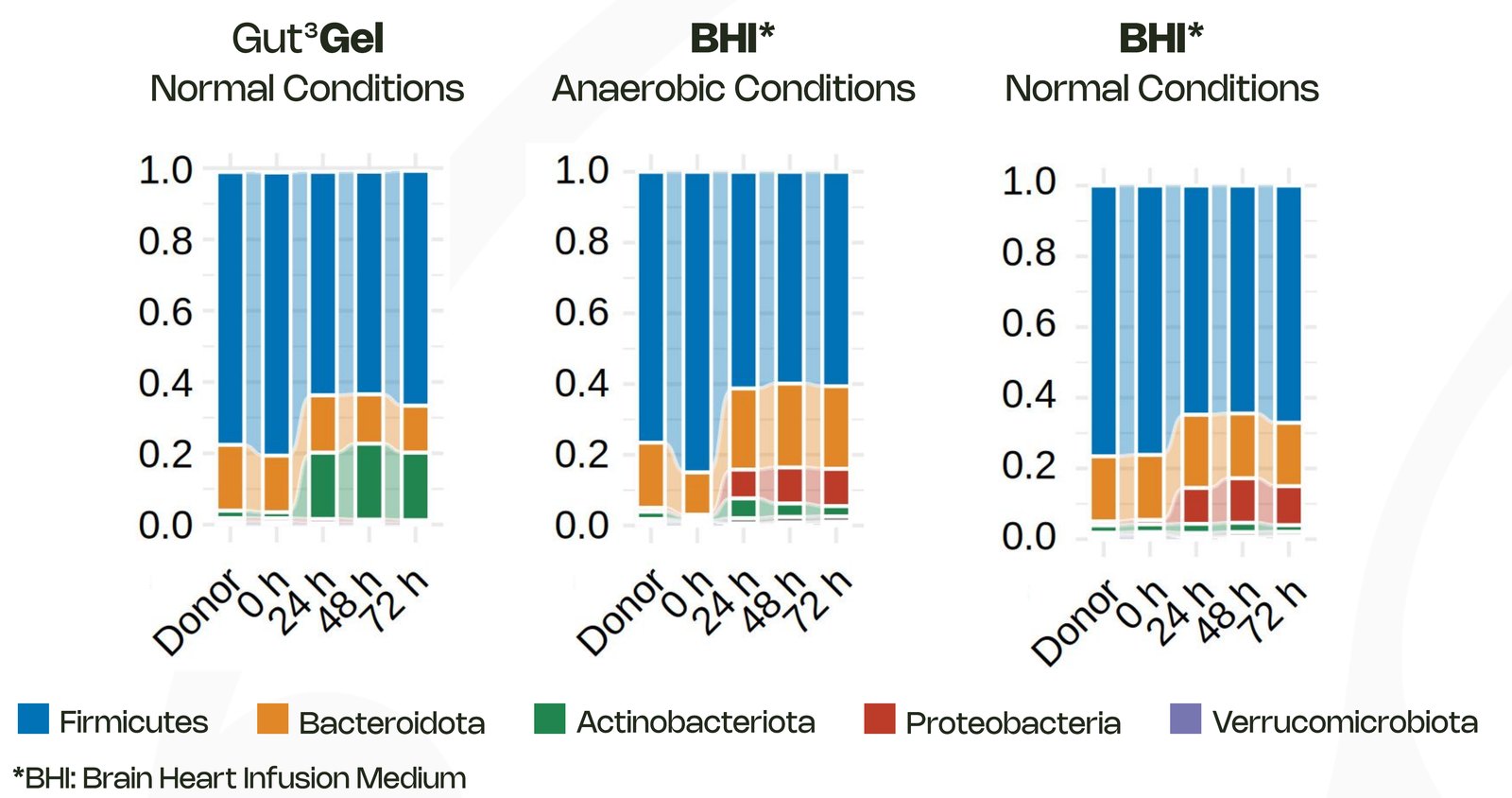
- Gut3Gel promoted higher Firmicutes:Bacteroidetes ratios.
- Increased Actinobacteriota abundance (green).
- Proteobacteria (red tones) expanded notably in BHI under aerobic conditions, but remained low in Gut3Gel cultures.
Short-chain fatty acids
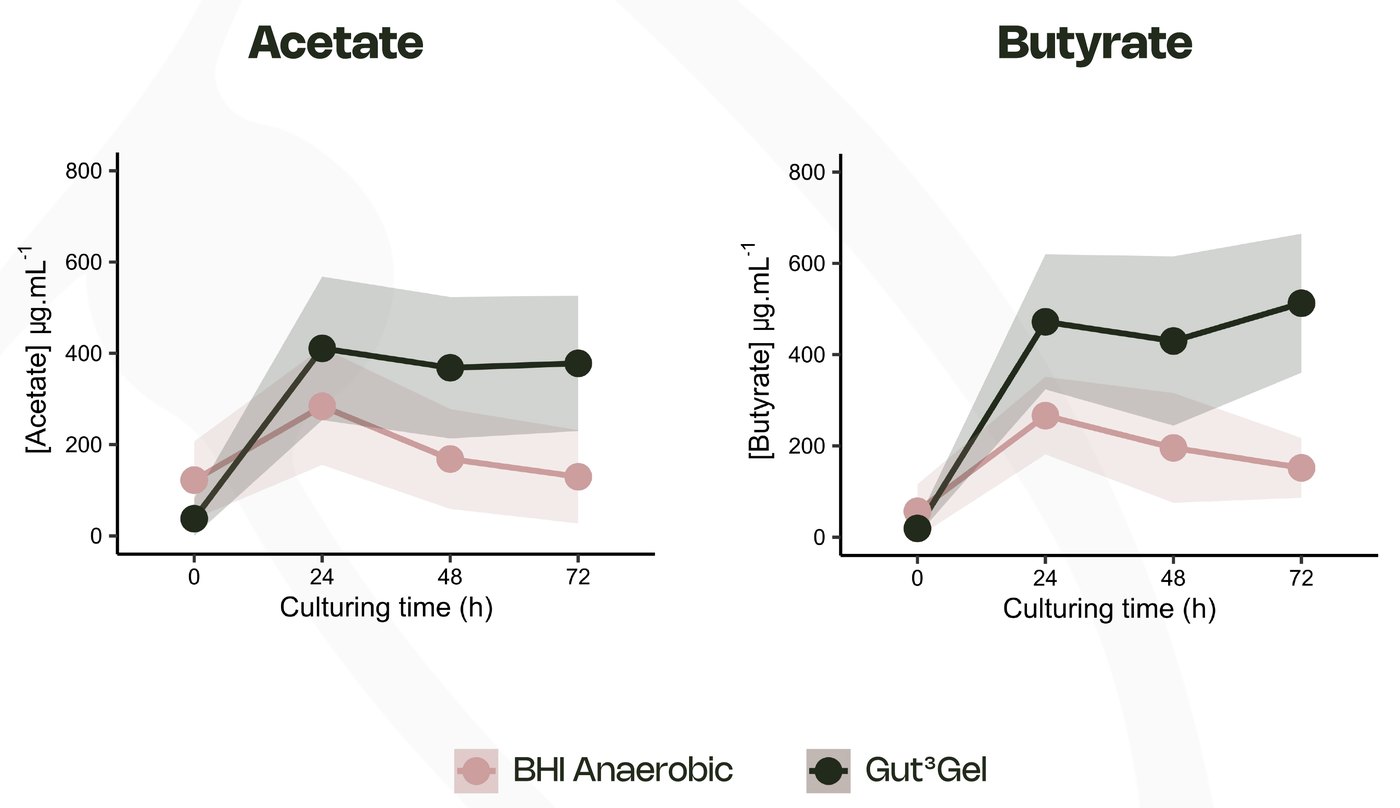
- Higher production of acetate and butyrate in Gut3Gel than in BHI cultures under anaerobic conditions.
Why it matters Acetate and butyrate are key products of a working gut community, so they show that the community is metabolically active as well as present.
Derisking pro-, prebiotic and live biotherapeutic development at early stages
A prebiotic challenge on the stabilised community, read out by composition and by metabolic activity.
Inulin supplementation
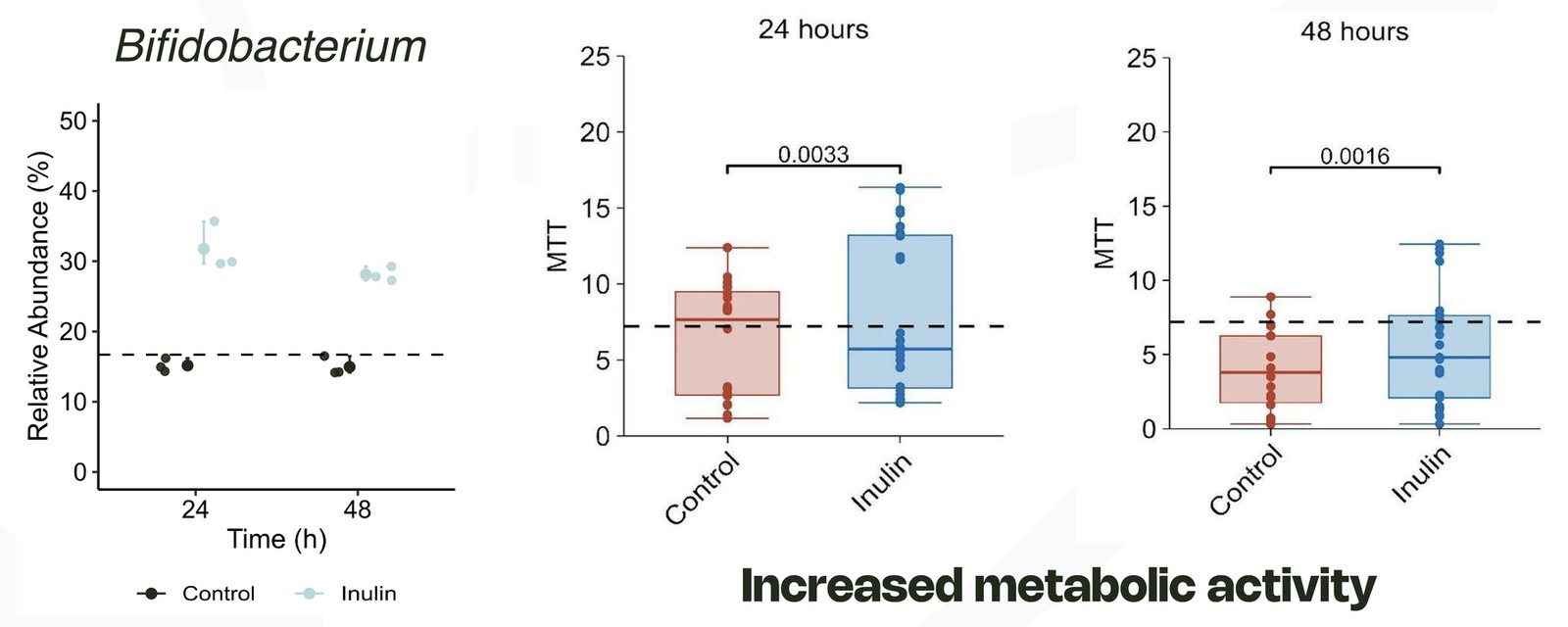
Method After stabilising the microbiota in Gut3Gel for 24 hours, inulin treatment was performed for 24 and 48 hours.
- Increased abundance of Bifidobacterium after inulin treatment, as reported in clinics.
- Increased metabolic activity after inulin treatment.
Key features
- Physiologically relevant Replicates intestinal mucus properties, such as nutrient content and viscoelasticity.
- Microbiota-friendly Supports growth of key families, e.g. Bacteroidaceae, Coriobacteriaceae, Prevotellaceae, Lachnospiraceae, Oscillospiraceae and Ruminococcaceae.
- Lab-compatible Ready for standard equipment and high-throughput setups.
Applications
- Microbiome research
- Efficacy of antimicrobial agents, probiotics, prebiotics and live biotherapeutics
- Development of personalised therapies
Keep reading
Gut³Gel
3D in vitro model of human gut mucus, in colon and small-intestine versions.
Gut³Gel: a high throughput mucus model to support intestinal microbiome research
Gut³Gel sustains diverse donor microbiota and enriches mucus-associated bacteria.
All application notes
Notes for every model, by anatomical site, on Our Science.
Planning a gut microbiota study?
Tell us your donor material, readout and throughput.
contact@bac3gel.com